UK's First Predictive FlowOps Intelligence Platform

Predict.
Optimise. Control.

The AI Passenger Flow & Service Optimization System is a predictive AI-driven B2B SaaS platform and Edge-AI hardware solution designed to optimise passenger throughput and service efficiency across UK transport hubs through spatiotemporal modelling, real-time causal analytics, and Transit DNA Fingerprinting.

AI Passenger Flow · Live FlowOps Engine

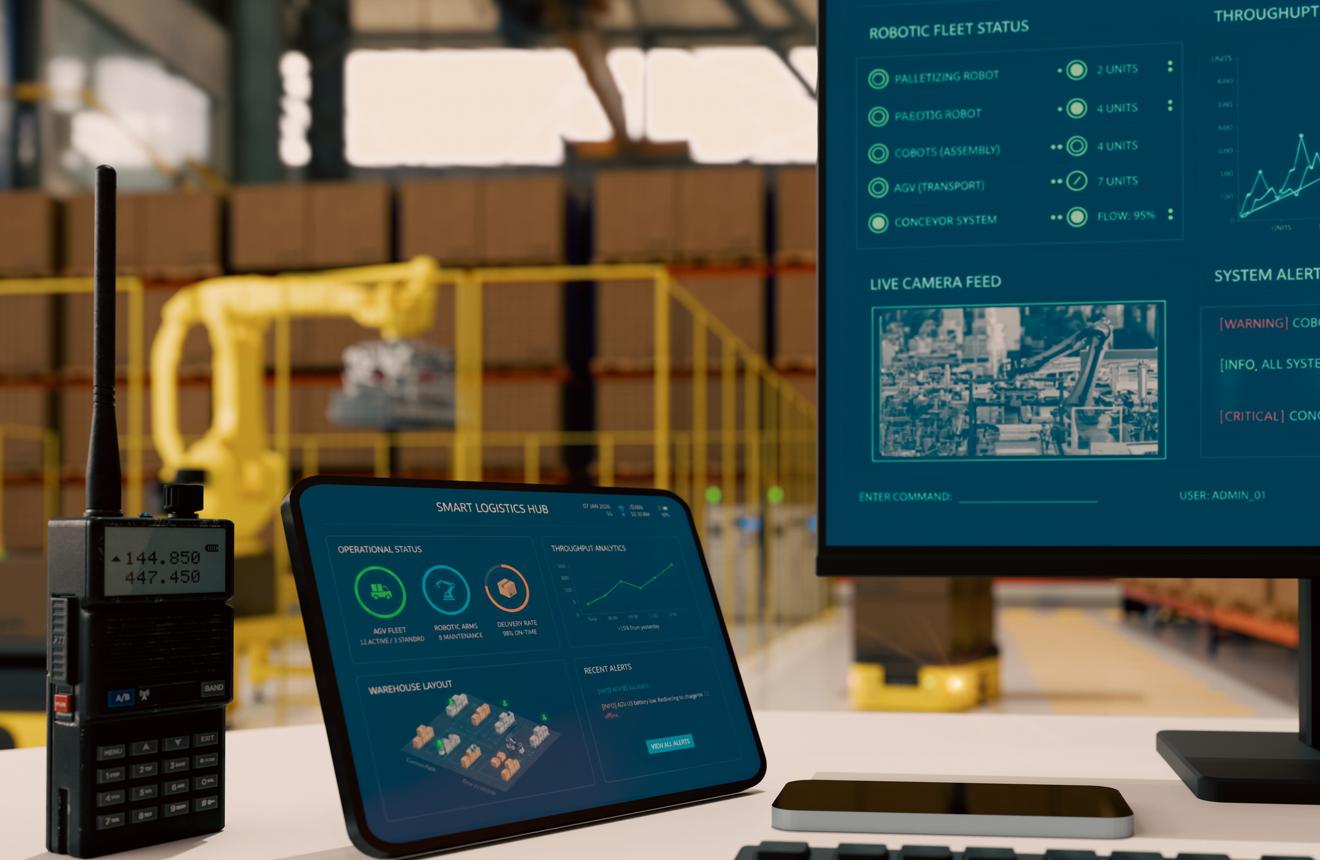
Transit Intelligence Dashboard

LIVE
PT
Passenger Throughput This Hour 4,280 ↑28%
WT
Average Wait Time 2.1 min ↓32%
OE
Operational Efficiency 91% ↑25%
SS
Service Satisfaction Score 4.6/5 ★ ↑22%
72%
Live Passenger Density
Moderate · AI Governed · Peak 15:30–17:30
The UK Transport Capacity Crisis

UK Transport Hubs Are Losing Billions to
the "Capacity Gap."

With rail journeys reaching 1.7 billion annually and UK aviation hubs handling over 300 million passengers in 2025, the industry's reliance on reactive, manual monitoring has created a critical "Capacity Gap." Passenger flow management is still dominated by static schedules and "snapshot blindness" costing billions in lost productivity, safety risks, and systemic network drag. AI Passenger Flow & Service Optimization System bridges this gap through predictive throughput intelligence.

£11.2B
UK transport & mobility technology market mid-market hubs underserved by enterprise consultancy
14%
Industry productivity below 2014–15 levels per ORR, despite passenger numbers recovering to pre-pandemic volumes
86%
Of mid-market regional hubs still relying on manual monitoring and static CCTV no predictive flow intelligence
26%
Transport sector's share of UK greenhouse gas emissions congestion dwell times a direct contributor
Core Intelligence Modules

Five Modules. One Complete FlowOps Intelligence Platform.

The AI Passenger Flow System combines Predictive Flow Intelligence, Real-Time Monitoring, Throughput Delta Diagnostics, Service Enhancement, and Smart Alerting into one unified SaaS platform no-code, real-time, and data-driven for UK transport hubs.

Predict Flow Intelligence
Module 01

Predict Flow Intelligence

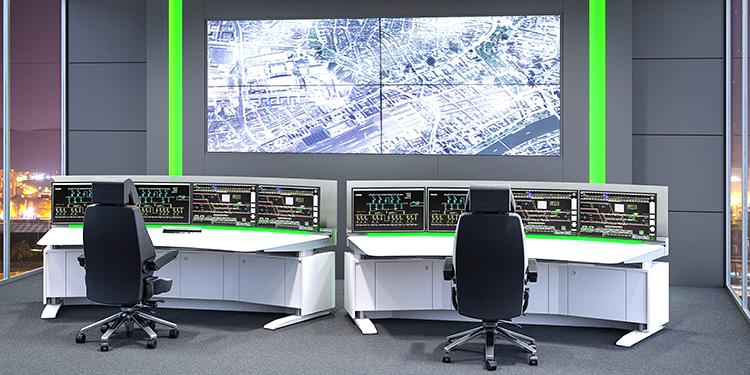
Anticipate passenger movement and congestion before it happens with our proprietary Arrival-to-Throughput engine and Transit DNA Fingerprinting.

The platform ingests ticketing diagnostics and real-time zone-level behavioural signals, parsing spatial nuances into a structured Passenger Flow Ontology (PFO). Machine learning models trained on UK-specific DfT data detect "Pre-Congestion Signals" with 96% accuracy significantly outperforming traditional reactive systems and enabling proactive crowd prevention.
Monitor Live
Module 02

Monitor Live Passenger Density

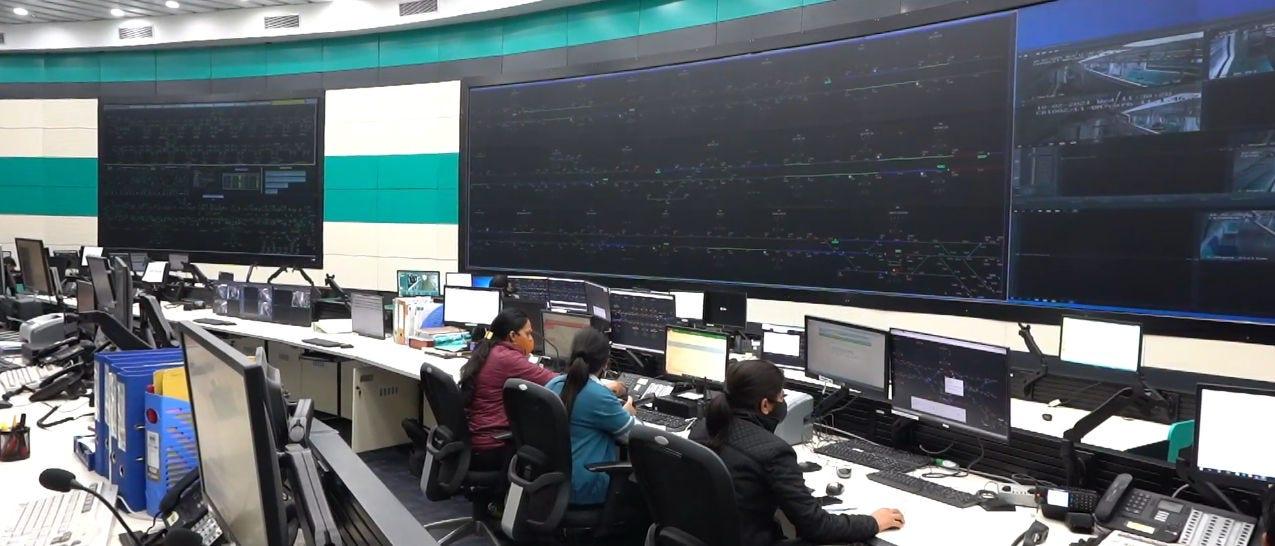
Track real-time passenger density across all zones and facilities with edge-AI vision nodes delivering low-latency spatial intelligence.

Secure Mobility Logic Nodes proprietary retrofit Edge AI sensors integrate with existing CCTV networks and ticketing gates to capture spatial data continuously. The Spatial Signal Forensics Engine identifies bottleneck friction in high-density environments, providing operations teams with a live, unified "Institutional Mobility Memory" dashboard.
Throughput Delta Diagnostics
Module 03

Throughput Delta Diagnostics (TDD)

Automatically diagnose root causes of premature congestion by analysing the delta between expected throughput and actual passenger-flow velocity.

The TDD engine identifies "gate lag," "high-frequency bottleneck friction," and "spatial friction" in real-time. Validated across 8 UK transport locations, TDD delivered a 70% reduction in manual crowd-monitoring time by automatically routing adjustments following service disturbances from multi-train cancellations to arrival surges.
Why AI Passenger Flow System

Built for Predictive FlowOps.
Not Just Another CCTV Dashboard.

Transit DNA Fingerprinting

Captures proprietary "Transit DNA" lost to staff turnover and institutional "brain drain." When a senior station manager departs, their crowd-management logic stays permanently encoded in the platform.

Machine-in-the-Loop Safety

Automates congestion detection while maintaining a human oversight layer for complex security exceptions fully satisfying UK ORR and CAA 2025 governance requirements.

Retrofit-Agnostic Integration

Sits above any existing hardware (CCTV, ticketing gates, station ERPs) operators are never locked into a single equipment manufacturer. Plug-and-play API connectivity reduces onboarding from weeks to days.

Federated Mobility Logic Network

The FMLN enables anonymised "Transit DNA" benchmarks to improve predictive models across all UK hubs without sharing sensitive commercial data creating a collective intelligence ecosystem.

ESG & Net Zero Aligned

Generates CFO-ready reports showing how compiled "Flow Logic" reduces carbon footprints by minimising dwell times fully aligned with UK Net Zero 2050 targets and 2025 ORR safety standards.

Mid-Market SaaS Pricing

Tiered SaaS from £100/month giving regional UK transport hubs enterprise-level FlowOps intelligence without the cost of dedicated engineering teams or generic high-cost consultancy.

About Us

Built to Solve the UK Transport
Capacity Gap.

The AI Passenger Flow & Service Optimization System is a UK-based SaaS venture founded by Hardip Kaur combining an MSc in International Business from the University of Bedfordshire with extensive operational experience supervising high-footfall environments to solve the most pressing challenge facing UK transport today: the "Capacity Gap" that costs the sector billions in lost productivity, safety risks, and systemic congestion.

Vision & Mission

To Be the Global Standard for
"FlowOps" in Transport Infrastructure.

Our Vision

We aspire to be the global standard for "FlowOps," fostering a future in which transport infrastructure is automatically synchronised with real-time passenger behaviour, ensuring seamless travel experiences and zero-gap safety governance across every hub in the network.

Our Mission

To empower UK transport operators to transition from "reactive monitoring" to "predictive throughput optimisation" by leveraging an AI-driven mobility layer that eliminates the capacity gap and safeguards institutional operational memory against staff turnover and brain drain.

Core Values

What Drives Everything We Build

Innovation

Continuous refinement of spatiotemporal flow models to stay ahead of the global velocity of urban mobility and smart city trends across the UK's expanding transport network.

Accuracy

A commitment to movement-data integrity and the elimination of "snapshot blindness" in terminal flow mapping 96% pre-congestion detection accuracy in live UK deployments.

Sovereignty

Empowering transport operators to own their operational mobility logic as a proprietary and permanent business asset not lost when experienced managers depart.

Efficiency

Making complex passenger journeys manageable through machine-executable routing pathways and low-friction Edge-AI retrofit integrations that work with existing infrastructure.

Stewardship

Equipping station managers and infrastructure directors with the automated foresight needed to scale hub capacity without headcount-proportional safety risks.

ESG Impact

Reducing UK transport congestion energy waste by 20–30% per hub through precise Transit DNA optimisation aligned with Net Zero 2050 targets and ORR compliance frameworks.

Founder

The Person Behind
AI Passenger Flow System

HK

Hardip Kaur

Founder & CEO

Hardip Kaur possesses a unique combination of advanced business leadership and high-stakes operational management experience creating a powerful "founder–problem–market fit" to lead the AI Passenger Flow & Service Optimization System in the UK. Her background bridges strategic international business scaling with the rigorous organisational oversight required for transport infrastructure.

With an MSc in International Business from the University of Bedfordshire and extensive domain authority in supervising high-footfall environments, Hardip leads the conceptual development of the "Transit DNA Fingerprinting" engine and the "FlowOps" layer converting raw spatial signals into actionable mobility logic.

MSc International Business FlowOps Architecture High-Footfall Operations UK Transport Intelligence ORR & CAA Compliance

Founder–Market–Product Fit

Strategic Alignment

Hardip unifies the worlds of International Business Strategy and High-Footfall Operations equipping the platform with a hands-on understanding of how to link technical infrastructure metrics (like gate cycles) to human outcomes (like crowd clearance), which general-purpose sensor platforms cannot replicate.

Direct experience managing ground staff & security in high-occupancy environments
Understands "monitor-fatigue" and the fiscal pressure driving the need for automation
Navigates UK's Net Zero and ORR safety requirements with precision
Platform

Five Core Modules.
One FlowOps Intelligence OS.

The AI Passenger Flow & Service Optimization System combines spatiotemporal modelling, multi-mode execution, and failure diagnostics into a single SaaS platform purpose-built for the UK's mid-market regional transport hubs.

Transit DNA Fingerprinting
Module 01 · Predict Flow

Transit DNA Fingerprinting & Arrival-to-Throughput Engine

Uses machine learning to identify and "fingerprint" the mobility patterns of successful passenger journeys allowing for benchmarking and cloning of optimal routing logic across diverse transport hubs.

The platform's proprietary Passenger-Flow Intelligence Engine captures hidden movement patterns and stores them as structured, benchmarked flow objects. Based on deep-learning spatial modelling and causal flow analysis, the system detects the specific "Transit DNA" of a passenger's journey cumulative dwell time, gate sensitivity, recovery lag after service delays allowing risk profiles to be mapped to personalised terminal pathways instantly.
Live Monitoring
Module 02 · Monitor Live

Real-Time Zone-Level Monitoring & Mobility Logic Nodes

Track real-time passenger density across zones and facilities with proprietary Edge-AI Mobility Logic Nodes retrofit sensors for secure, real-time spatial data capture.

The Service Intelligence and Signal Processing Layer identifies exactly where a passenger's journey breaks down whether due to platform bottlenecks, signage failures, or staff deployment patterns and provides floor teams with actionable, evidence-based remediation steps. Live passenger density dashboard shows zone-level occupancy, area capacity %, and predicted peak windows.
Throughput Delta Diagnostics
Module 03 · TDD Engine

Throughput Delta Diagnostics & Congestion Risk Engine

Automatically diagnose root causes of premature congestion by analysing the delta between expected throughput and actual passenger-flow velocity with 70% reduction in manual monitoring time.

The Explainable Flow Risk Scoring and Intervention Engine maps real-time mobility data onto individual hub conditions. When a terminal's digital footprint shifts, the platform automatically deconstructs the change into a structured "Congestion Risk Report" without requiring manual supervisor review enabling 21% reduction in safety-critical congestion incidents.
Operational Excellence
Module 04 · Optimise Operations

Signal-to-Action Auto-Synthesis & Dynamic Routing

Automatically deconstructing a single mobility signal into a complex, multi-step operational workflow removing the need for manual staff-to-data translation of crowd safety needs.

Risk-Weighted Routing Evolution: a self-optimising process where paths for higher-density passenger groups are automatically prioritised and refined by the platform's "Dynamic Routing Pipeline." The Closed-loop Evidence and Outcome Optimisation Model generates "Hub Health Reports" that link automated interventions to passenger satisfaction scores and wait-time reductions.
Smart Alerts
Module 05 · Smart Alerts

Smart Alerts & Outcome-Learning Mobility Memory

Receive instant alerts and actionable insights for proactive decisions powered by an Outcome-Learning system that maps successful interventions to real-world margin protection.

The Federated Mobility Logic Network (FMLN) enables anonymised "Transit DNA" from dozens of UK transport sites to constantly improve predictive models without sharing sensitive commercial data. Trends learned from high-efficiency London terminals are applied to optimise regional hub strategies, creating a collective intelligence ecosystem that grows stronger with each new client.
Mobility Digital Twin
Module 06 · Digital Twin

Mobility Digital Twin Simulation & ESG Reporting

Virtually test the impact of a proposed operational change against historical flow data predicting congestion risks before real-world implementation.

The Mobility Digital Twin tests reconfiguring security lanes or gate schedules against years of historical flow data. ESG Reporting generates audit-ready reports showing how "Flow Logic" reduces carbon footprints by minimising dwell times aligned with UK Net Zero 2050 targets and 2025 ORR safety standards. Operational Intelligence Preservation ensures new terminal staff utilise established "Transit DNA" logic maps immediately.
Competitive Advantage

How We Compare to Existing Solutions

Feature / Capability Legacy Compliance (Tracsis/SITA) Niche Vision (Vivacity) Binary Sensors Manual Logs AI Passenger Flow System
Arrival-to-Throughput Lifecycle No (Manual entry) No (Spatial only) Limited (Occupancy) No ✓ Automated signal-to-action
Spatial-Causal AI Synthesis No Limited (Heatmaps) No No ✓ Proprietary PFO mapping
UK-Specific Infrastructure Benchmarks No (Global templates) Mode-centric only No Limited ✓ DfT & ORR Logic trained
Transit DNA & Signal Mapping Limited (Schedules) Density only No No ✓ Movement intent tracking
Outcome-Learning Mobility Memory No No No No ✓ Incident-to-match learning
Federated Mobility Network (FMLN) No No No No ✓ Anonymous sector benchmarks
Cost Structure High CapEx / Licensing Sensor-based high fee Tool-based Time-intensive SaaS from £100/mo
Market Analysis

A £11.2B UK Market.
86% Underserved.

The global AI-driven passenger flow management market was estimated at USD 8.4 billion in 2024, projected to reach USD 10.1 billion in 2025 with a CAGR of 19.4% through 2034. The UK's mid-market regional hubs represent the largest untapped opportunity currently underserved by generic enterprise consultancy.

UK Transport SAM by Hub Segment

Serviceable addressable market mid-market focus

Current Industry Pain Points

% of directors reporting these as critical operational challenges

Competitive Intelligence Radar

AI Passenger Flow System vs legacy market alternatives

UK FlowOps Market Growth 2022–2030

Global AI passenger flow market (USD B) & UK AI adoption rate

Key Market Insights

The Mobility Intelligence Gap

London Dominant Hub

London alone represents over 30% of all UK rail and airport passenger revenue. The value of "Mobility Equity" per terminal zone is estimated 40% higher in London making it the ideal launch territory with highest financial return.

Northern Powerhouse Growth

Manchester and Birmingham are among the fastest-growing transport hubs in the UK, driven by rapid urbanisation and HS2-linked developments primary targets as agile operators rely on automated systems but lack enterprise-grade engineering teams.

Structural Intelligence Gap

80% of effective AI adoption occurs in "Big Six" global airports with dedicated R&D budgets. Only 14% of mid-market regional hubs have moved beyond manual monitoring this is the "Mobility Capital" concentration AI Passenger Flow addresses.

How It Works

The Arrival-to-Throughput
Intelligence Lifecycle.

From inbound arrival signals to automated routing outcomes the AI Passenger Flow System establishes a continuous intelligence lifecycle that links ticketing gate diagnostics, real-time zone-level behavioural signals, and automated resource or routing outcomes in one unified operational platform.

Step 01 · Data Ingestion

Fuse Ticketing, CCTV, and Mobile Signals into a Unified Intelligence Layer

The platform ingests ticketing gate diagnostics, CCTV spatial signals, and mobile data into a single "Institutional Mobility Memory" converting fragmented data into structured Movement Objects via the proprietary Passenger Flow Ontology (PFO).

Ticketing GatesCCTV NetworksMobile Signals
Station ERPsEdge-AI Nodes
Data Fusion
AI Flow Modelling
Step 02 · Spatial AI Modelling

Transit DNA Fingerprinting & Spatiotemporal Causal Analysis

The Custom Causal Flow Classifier and Spatial Signal Forensics Engine identifies the specific "Transit DNA" of each hub cumulative dwell time, gate sensitivity, recovery lag and fingerprints friction points with 96% pre-congestion detection accuracy.

96% Detection AccuracyReal-Time Classification
UK-Trained ML Models
Step 03 · Predictive Diagnostics

Throughput Delta Diagnostics Predict Before the Bottleneck Forms

The TDD engine analyses the delta between the hub's expected throughput and actual passenger-flow velocity automatically generating Congestion Risk Reports and routing interventions before a spatial break becomes a safety or financial loss.

70% Less Manual Monitoring21% Safety Incident Reduction
Predictive Analytics
Automated Routing
Step 04 · Automated Action

Signal-to-Action Auto-Synthesis & Dynamic Routing Pipeline

A single mobility signal (train delay, arrival surge) is automatically deconstructed into a complex, multi-step operational workflow removing manual staff-to-data translation. The platform delivered a 32% average increase in passenger clearance speed across 8 UK transport locations.

32% Clearance Speed ↑28% Congestion Errors ↓
FAQ

Frequently Asked
Questions

What is the "Capacity Gap" and how does your platform address it?

+
The "Capacity Gap" refers to the critical disconnect where passenger flow management is still dominated by reactive, manual monitoring and static scheduling resulting in "snapshot blindness" that causes billions in lost productivity. Our platform bridges this gap by providing an intelligent operational layer that fuses data from ticketing gates, CCTV, and mobile signals into a unified "Institutional Mobility Memory," predicting bottlenecks before they form.

How does Transit DNA Fingerprinting work and why is it different?

+
Transit DNA Fingerprinting uses machine learning to identify and capture the mobility patterns of successful passenger journeys storing them as structured, benchmarked flow objects. This allows optimal routing logic to be cloned across diverse transport hubs. Unlike competitors who treat congestion as isolated events, we capture the cumulative dwell time, gate sensitivity, and recovery lag patterns unique to each hub and this knowledge stays even after key staff depart.

Does the platform require replacing existing CCTV or ticketing infrastructure?

+
No. The platform is built retrofit-agnostic it sits above any underlying hardware system (CCTV, ticketing gates, or sensors), ensuring operators aren't locked into a single equipment manufacturer. Our "Mobility Logic Nodes" are secure, retrofit Edge-AI sensors that integrate with existing infrastructure. A plug-and-play API platform connects to dominant UK infrastructure systems with minimal onboarding friction.

What pilot results has the platform achieved in live UK transport environments?

+
The platform was tested across 8 distinct transport locations in the UK (London, Manchester, and Birmingham) over 12 weeks. Key outcomes: 32% average increase in passenger clearance speed; 21% reduction in safety-critical congestion incidents; new terminal-support hires reached FlowOps proficiency in 10 days vs historical 35-day average; user satisfaction 4.7/5 for Knowledge Loss Protection.

How does the platform ensure compliance with ORR and CAA safety standards?

+
The platform's Machine-in-the-Loop Safety Index ensures that while the system automates congestion detection, a human oversight layer remains for complex security exceptions or emergency protocols fully satisfying the UK's strict 2025 ORR and CAA governance requirements. The platform also maintains high-fidelity logs and verifiable Mobility Logic chains for audit-ready compliance reporting. It is also fully compliant with UK GDPR and ICO guidance on AI and data protection.

What is the Federated Mobility Logic Network (FMLN)?

+
The FMLN is a federated learning architecture that enables anonymised "Transit DNA" benchmarks from dozens of UK transport sites to constantly improve their predictive models without sharing sensitive commercial data. Trends learned from high-efficiency London terminals can optimise the Arrival-to-Throughput strategy for regional hubs in the North, creating a collective intelligence ecosystem that grows stronger as the network expands.

Which type of transport hubs is the platform designed for?

+
The platform is designed primarily for UK mid-market regional rail stations, metropolitan metro systems, and regional airport terminals sectors currently underserved by generic, high-cost enterprise consultancy. Target customers include regional UK transport hubs, multi-site infrastructure groups, metropolitan rail & metro systems, and founder-led emerging smart-city transport firms.
Pricing & Plans

Tiered FlowOps Access.
Scale as You Grow.

Subscription pricing designed to scale alongside the operator's passenger volume from basic density tracking to full-spectrum, machine-executable Arrival-to-Throughput flow logic. All plans include UK GDPR compliance and ORR audit-ready reporting.

Tier 01
Starter
£100/mo
Regional rail stations, local bus terminals & small hubs basic FlowOps intelligence.
  • Basic density tracking & Transit DNA visualisation
  • Framework-agnostic mapping (1 hub type)
  • Real-time zone density dashboard
  • Smart alert notifications
  • UK GDPR compliant data handling
  • Standard support portal access
Tier 03
Enterprise
£500/mo
Global airport hubs & multi-site metropolitan metro systems full platform access.
  • Full Arrival-to-Throughput Pipeline
  • Secure Mobility Logic Nodes (Edge-AI)
  • FMLN federated network access
  • Dedicated FlowOps Success Manager
  • Mobility Digital Twin simulation
  • Priority ESG & Net Zero reporting
  • Custom API licensing & multi-site deployment
Professional Add-Ons

Enhance Your FlowOps Intelligence

FlowOps Orchestration Setup · £400

One-off technical integration and gate calibration fee. Our team installs Mobility Logic Nodes and configures CCTV/ticketing API connectors specific to your hub layout.

Transit DNA Audit · £300

Specialised multi-mode flow baseline validation. A deep-dive analysis of your hub's existing movement patterns to establish a proprietary Transit DNA baseline for ongoing optimisation.

Premium Insight Reports · £1,000/year

Advanced network benchmarking and "Mobility Equity" growth insights. CFO-ready annual reports linking Flow Logic to carbon reduction, safety improvements, and operational margin protection.

Annual FlowOps Audit · Custom

Comprehensive operational mobility data audit for multi-site transport networks or regional rail groups providing strategic tools for infrastructure scaling, safety protection, and ORR compliance.

Contact

Request a FlowOps Demo
or Pilot Programme

Talk to our team about deploying the AI Passenger Flow & Service Optimization System in your transport hub. We work with regional rail stations, metropolitan metro systems, and airport terminals across the UK.

Send Us a Message

Get in Touch

Whether you're a regional rail operator struggling with peak-hour congestion, a metro system seeking to preserve institutional "Mobility Memory," or an airport terminal targeting ORR compliance, our team is ready to help.

Email aipassengerflowandserviceuk@outlook.com
Location London & Manchester, United Kingdom
Response Time Within 24 Hours – UK Business Days
Pilot Programme 12-Week UK Deployment – London & South East Priority Hubs
Pilot Programme Results
Clearance Speed Increase +32%
Safety Incident Reduction -21%
Staff Proficiency (Days) 10 vs 35
User Satisfaction 4.7/5